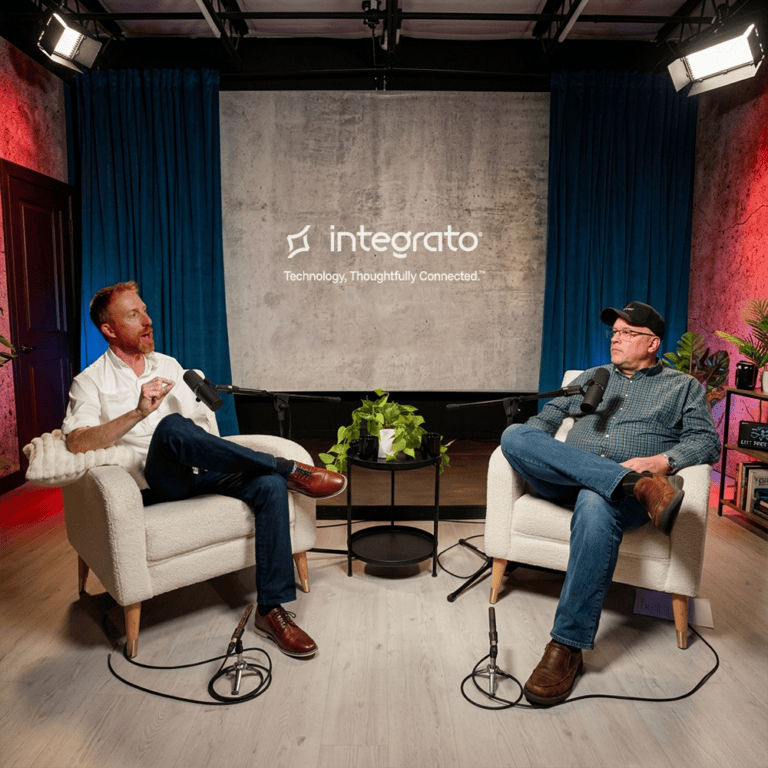
Four Ways HR Leaders Can Lead the AI Shift Successfully

Talk to anyone at work today, and AI will probably come up. Some are excited, some skeptical, and a few quietly worried. What most agree on is that AI is changing the workplace. The bigger question is: how do we make AI adoption work for people, not just for business?
That’s where HR leadership plays a critical role.
Just a few years ago, HR leaders were the ones helping organizations navigate the shock
of the pandemic. Overnight, policies changed, wellbeing became a boardroom priority, and maintaining culture became harder. HR stepped up. Now, with AI in human resources, HR has another opportunity to lead.
At Integrato, we’ve seen a common mistake: treating AI adoption as an IT rollout. Businesses buy the tools, switch them on, and expect benefits to follow. But AI adoption in HR is mostly about people, how they use it, whether they trust it, and whether it improves their work.
Here are four proven ways HR leaders can drive successful, people-first AI adoption.
1. Start with the Business Problem, Not Just the Tool
It’s tempting to focus on the shiny side of AI, “Look what this tool can do.” The better question is: “Where do we need AI most?”
Maybe employees are overwhelmed with admin work. Maybe finding the right information takes too long. Or maybe managers spend hours compiling reports. These are real workplace pain points where AI in HR can make a difference.
HR leaders are uniquely positioned here. They hear directly from employees about frustrations while also understanding strategic business goals. This means HR can shape AI adoption strategies that make sense commercially and practically.
When employees see AI solving real problems, not just adding complexity, adoption happens faster.
2. Build a Culture Open to Experimentation
Change is uncomfortable. AI adoption brings excitement for some and anxiety for others. If HR ignores these emotions, adoption will stall.
The goal isn’t to push AI on people. It’s to create a culture where employees feel safe exploring new tools. This could mean pilot projects, “lunch-and-learn” sessions, or time dedicated to experimenting with AI.
Leaders also play a role. When managers use AI visibly, drafting updates or reviewing data, they send a message: “This is useful, and I trust it.” HR can encourage leaders to model this behavior.
Small wins matter. If AI saves someone 20 minutes on a routine task, it proves the tool’s value. Culture shifts start with these wins.
3. Keep Learning at the Center of AI Adoption
AI adoption isn’t a one-time project. Tools evolve, and so must employees’ skills. Continuous learning is essential.
Training should be easy to access: short online sessions, quick guides, or peer-to-peer sharing often work better than lengthy workshops.
But learning goes beyond tool usage. Employees should know how to work with AI, how to write clear prompts, review results critically, and adapt the technology to their role.
When staff feel confident, they stop seeing AI as a threat and start seeing it as a valuable tool. And that makes adoption stick.
4. Look Beyond Productivity Numbers
It’s tempting to measure AI success purely in output: How much faster are tasks completed? But HR leadership in AI adoption needs a broader view. Engagement, wellbeing, and job satisfaction matter just as much.
AI has the potential to reduce stress and free up employee energy. If people end the day less drained because AI handled repetitive tasks, that’s a win. If they gain more time for meaningful work, that’s an even bigger win.
Pulse surveys, quick check-ins, and open discussions can track these feelings. The key is to measure how AI feels, not just what it delivers. When employees feel better at work, productivity naturally follows.
Building Trust: The HR Imperative in AI Adoption
Every major workplace change runs on trust, and AI is no different. Employees want assurance that their data is safe, that AI is used responsibly, and that decisions about AI adoption are transparent.
HR can play a vital role by asking the right questions, setting clear policies, and ensuring transparency. Responsible AI adoption isn’t just compliance, it’s reassurance: “We’ve thought this through, we’re protecting you, and we’re using AI in a fair way.” That trust is essential for success.
A People-First Approach to AI
We’ve been through workplace transformations before, email, the internet, laptops, remote work. Each time, organizations that thrived were those that made the change people-friendly.
AI in HR is no different. By starting with real business needs, building a culture of curiosity, keeping learning at the center, and measuring wellbeing alongside productivity, HR leaders can guide AI adoption in a way that benefits both employees and business.